

How Crypto Projects Generate Revenue: Beyond Token Hype
Learn how crypto projects earn real revenue beyond hype; fees, staking, real use cases, and sustainable blockchain-based business models.
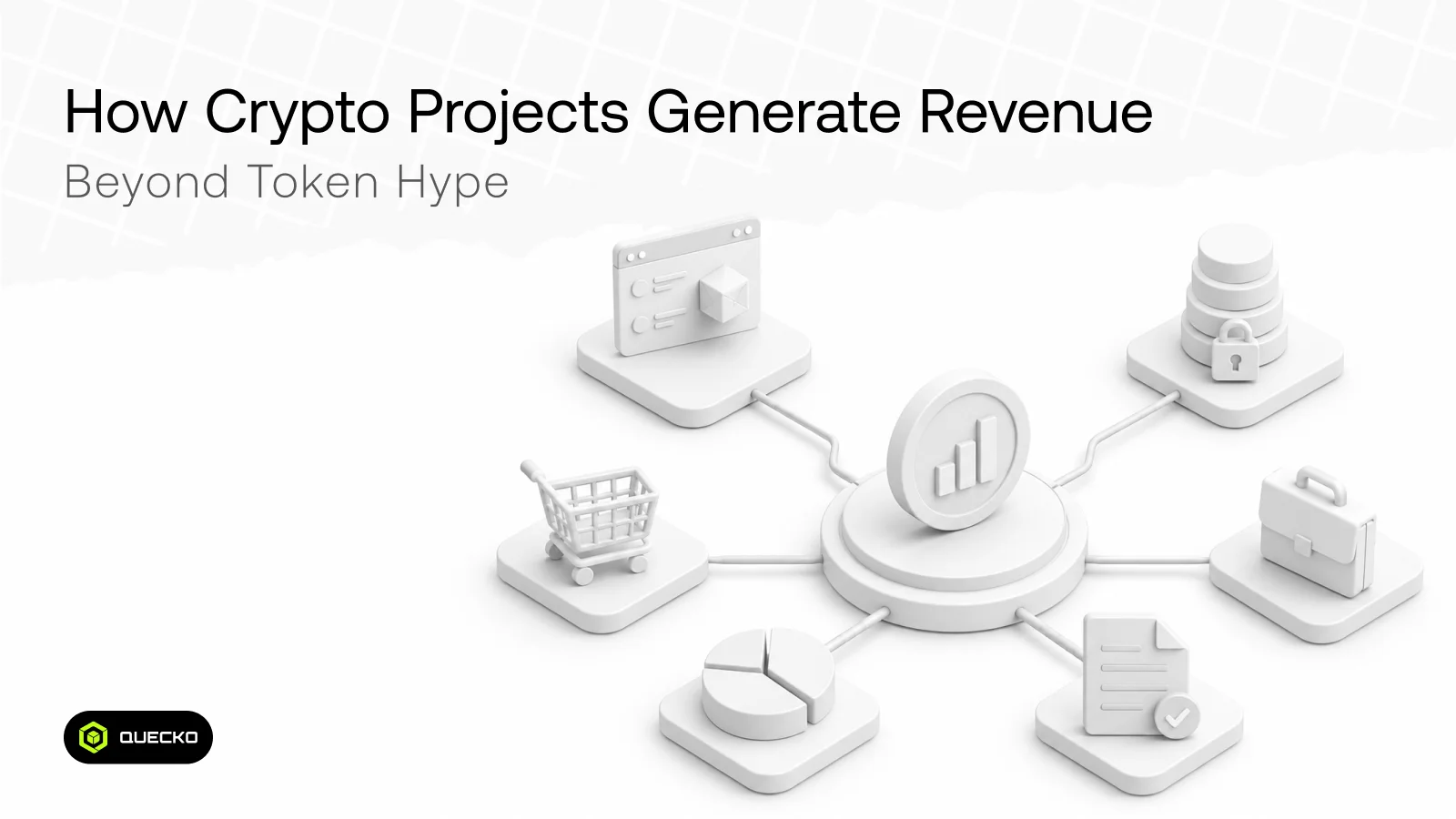
A few years ago, most people jumped into crypto with one goal:
Buy low, sell high, and hope for the best.
But here’s the truth most don’t realize. The smartest projects aren’t relying on price pumps anymore.
They’re building real revenue streams using blockchain technology and smart contracts, drawing on many lessons learned from past initial coin offerings.
And once you see how it works, you’ll never look at crypto the same way again.
From Hype to Real Revenue
Initially, everything centred on the hype cycle.
Projects launched, released flashy white papers, promised the future, and tokens pumped, especially during the wave of initial coin offerings, when early funding mattered more than real revenue.
Then came the crash.
That’s when the industry began to mature, as the focus slowly shifted from short-term excitement and market mania to building sustainable systems. Today, serious projects don’t just rely on narratives from white papers or short-term hype cycles, unlike the early initial coin offerings phase, where hype often came before product-market fit. They focus on building systems that generate consistent income using blockchain technology and even leverage the blockchain folk theorem to ensure trustless cooperation.
Transaction Fees: Small Cuts, Massive Scale
Let’s keep it simple.
Every time you:
- Send crypto
- Swap tokens (including asset swaps)
- Use a DeFi app
You pay a small fee.
Now imagine millions of users doing this daily.
That’s where real revenue comes from.
- Networks earn through validation across multiple blockchain networks, handling millions of transactions daily.
- Platforms profit from trading activity, including advanced products like perpetual futures contracts. Many of these activities now happen on a decentralized exchange, where users can trade directly without relying on intermediaries.
- Everything is recorded transparently in the on-chain Revenue Report, with efficiency often influenced by technical factors like block size.
Even Bitcoin transaction fees alone generate massive income for the network.
This is one of the strongest foundations of blockchain technology, especially as blockchain networks continue optimizing performance through better block size design.
Token Utility + Fee Burns = Built-In Value
Not all tokens are just for trading.
Some actually do something, unlike short-term HYPE tokens that rely purely on attention.
- Used to pay for services
- Power ecosystems
- Unlock features
And here’s where it gets interesting:
Some projects use fee burns, which permanently remove tokens from supply.
Others repeat this model with fee burns to create scarcity over time.
Less supply + real demand = stronger long-term value. This is the reason HYPE tokens struggle to maintain value without real utility.
Staking: Earn While You Hold
Instead of letting your crypto sit idle, many networks allow you to earn staking rewards.
Here’s how it works:
- You lock your tokens.
- Help secure the network.
- Earn a share of the fees.
It’s like earning interest, but powered by blockchain technology instead of banks, with rewards distributed automatically through smart contracts. Most staking systems are powered by smart contracts, which automatically distribute rewards without human involvement.
Buybacks: Crypto’s Version of Stock Strategy
Some projects are like companies.
They introduce a buyback program:
- Use profits to repurchase tokens
- Reduce circulating supply
- Support price stability
This adds a strategic layer that goes beyond speculation. Some projects also combine this with a buyback-and-burn mechanism to reduce supply over time and support long-term value creation.
Real-World Use = Real Revenue
This is where things get exciting.
Crypto isn’t just digital anymore.
Projects are solving real problems like:
- Fast cross-border payment services
- Financial access without banks
- Tokenizing assets into digital tokens, including Asset-backed Tokens that tie blockchain to real-world value.
These digital tokens represent real value, and real usage drives real income. The system makes money as a medium of exchange more efficient and borderless, and it allows the value to move instantaneously through global networks.
Think of some crypto platforms as digital financial hubs.
- A cryptocurrency exchange earns from trading fees.
- Lending protocols earn interest.
- NFT platforms take commissions.
All of this runs on blockchain technology, making it transparent and global from day one, often described as running on blockchain rails when people talk about the infrastructure side , and in many ways functioning as a global cryptopayment system that operates without borders. Some ecosystems are also evolving into full-scale asset management systems, helping users manage digital wealth more efficiently.
Alternative Chains = More Users, More Revenue
High fees used to be a problem.
Now, alternative chains are changing the game:
- Faster transactions are often achieved by optimizing block size.
- Lower costs
- Better user experience
More users = more transactions, especially across expanding blockchain networks.
More transactions = more revenue
This steady increase in usage reflects strong transaction growth across modern blockchain ecosystems. That’s the power of scaling through blockchain technology.
Transparency Builds Trust (and Growth)
Here’s something unique to crypto:
Everything is open.
- Every transaction is visible in the transaction history
- Anyone can verify activity.
- Data is public and trackable.
Blockchain technology is the only reason why this level of transparency exists. Although transparency enabled by blockchain helps in decreasing misuse, the study of Bitcoin laundering has brought to light the fact that compliance and monitoring tools are the need of the hour.
And trust? That’s what brings users back.
Why Does Hype Alone Not Work Anymore?
We’ve seen it before.
Projects rise fast during a hype cycle, particularly those built around HYPE tokens.
…and disappear just as quickly.
Today, investors are smarter and more cautious about HYPE tokens without fundamentals.
They don’t just read white papers; they look for:
- Revenue models
- Active users
- Real utility
Because hype fades.
Revenue doesn’t.
Modern investors also look beyond surface narratives and even interpret esoteric words often used in crypto whitepapers and technical discussions.
What Actually Defines Success Now?
It’s no longer just about price.
Smart investors look at:
- Real income streams
- Product usage
- Growing institutional adoption
- Strong market capitalisations
That’s how you separate real projects from noise.
The Bigger Picture: Open & Permissionless Systems
At its core, crypto is about freedom.
- Built on permissionless DLT
- No central authority controls access
- Anyone can participate
Platforms like the permissionless Ethereum protocol allow developers worldwide to build, scale, and monetize freely using blockchain technology, as seen across leading blockchain networks. This modular approach is often described as a building blocks system, where different blockchain components can be combined to create new applications. The rise of AI agents is also reshaping how users interact with blockchain systems, making automation more intelligent and scalable.
In practice, this often includes programmable dollars, cryptopayment systems that rival traditional fiat currencies, closing the branding gap with mainstream finance and further strengthening the global crypto payment system ecosystem. It even enables long-distance trade and new consumer apps that feel humanized and accessible. As adoption grows, more consumer apps are being built directly on blockchain infrastructure, making everyday usage simpler and more mainstream.
Quecko and the Shift From Hype-Driven Crypto to Structured Web3 Systems
These modular components are mere foundations for the parts of the system that show up during the execution of a certain function of the ecosystem.
Basically, it means that various parts of blockchain, like contracts capable of executing automatically, token systems, wallets, and decentralized applications, together form a single environment just like blocks forming a building.
Quecko makes a similar move by planning its solutions so that every piece from DeFi modules to tokenization frameworks can be easily plugged into larger ecosystems. Due to this, a project can scale up at a faster pace, be flexible, and change easily in line with evolving market needs without recapitulating the whole process.
In other words, rather than a single huge system doing everything, Web3 platforms are turning into connected layers of functions, each block making the whole network stronger.
Conclusion
If you remember one thing, let it be this:
Crypto projects don’t survive on hype; they survive on revenue.
The ones winning today are:
- Solving real problems
- Generating consistent income
- Building long-term ecosystems
And all of it is powered by blockchain technology.
So next time you see a new project, don’t just ask:
“Will this pump?”
Ask:
“How does this actually make money?”
That’s where the real opportunity is.
FAQs
1. How do crypto projects actually make money?
Most crypto projects get their income from users. Normally, a small fee is added to every transaction, swap, or interaction, and this amount really grows over time due to the nature of blockchain technology. So, instead of relying only on price hype, they make a profit from real user activity.
2. Is crypto still all about hype and price pumps?
Not really anymore. In the past, most projects followed a hype cycle. However, current changes are happening in the scene. Strong projects usually have a plan of producing real use, real users, and continuous revenue instead of just counting on market excitement or white papers.
3. What are transaction fees in crypto, and why do they matter?
Whenever you send or trade crypto, you pay a small fee. That fee helps run the network and is recorded in the transaction history. It may look small, but across millions of users, it becomes a major revenue source.
4. Why do some crypto projects burn tokens?
Some projects use fee burns to permanently remove tokens from circulation. This reduces supply over time. It doesn’t guarantee price growth, but it can support long-term value if the project has real demand built on blockchain technology.
5. How does Quecko relate to modern Web3 and blockchain projects?
Quecko is part of the Web3 community that aims to develop legitimate blockchain solutions instead of just churning out empty talk. It provides the necessary tools, such as decentralized finance (DeFi), smart contracts, and tokens, which enable real-world applications.
Author

Khola Abbasi
No description availableDate
1 day agoShare on

Related Blogs

$150 Oil: How Did We Get Here and What Comes Next?
1 hour ago

How Blockchain Is Transforming Digital Marketing Transparency
1 hour ago
How Crypto Projects Generate Revenue: Beyond Token Hype
1 day ago
How USDT Powers the Crypto Economy: Liquidity, Trading & Revenue
2 days ago








 +971-50-740-0268