Services

Web3 & Blockchain

Coin & Token Development Services — Tokenomics & ICO

Tokenomics That Hold Up After Launch Week Ends.

Quecko develops coins and tokens across every major standard — from native blockchain coins to ERC-20/BEP-20/SPL tokens — backed by tokenomics engineering designed for sustainable value, with a fully supported ICO path when you need to raise capital.

400+clients across 20+ countries
$300M+in funds generated
250+products built
150+engineers worldwide
400+clients across 20+ countries
$300M+in funds generated
250+products built
150+engineers worldwide
400+clients across 20+ countries
$300M+in funds generated
250+products built
150+engineers worldwide
400+clients across 20+ countries
$300M+in funds generated
250+products built
150+engineers worldwide
What We Build

What Quecko Delivers for Coin & Token Development

01

Native Coin & Chain Development

Full sovereign coin and chain infrastructure for projects that need their own native asset securing an underlying network, not just a token deployed on someone else's chain.

02

Standard Token Issuance

ERC-20, BEP-20, SPL, and TRC-20 token development matched precisely to your target ecosystem's technical and liquidity conventions.

03

Tokenomics Design

Supply, emission, vesting, and utility modeling stress-tested against realistic multi-year market scenarios, not just optimistic launch-day assumptions that ignore what happens at the first major unlock.

04

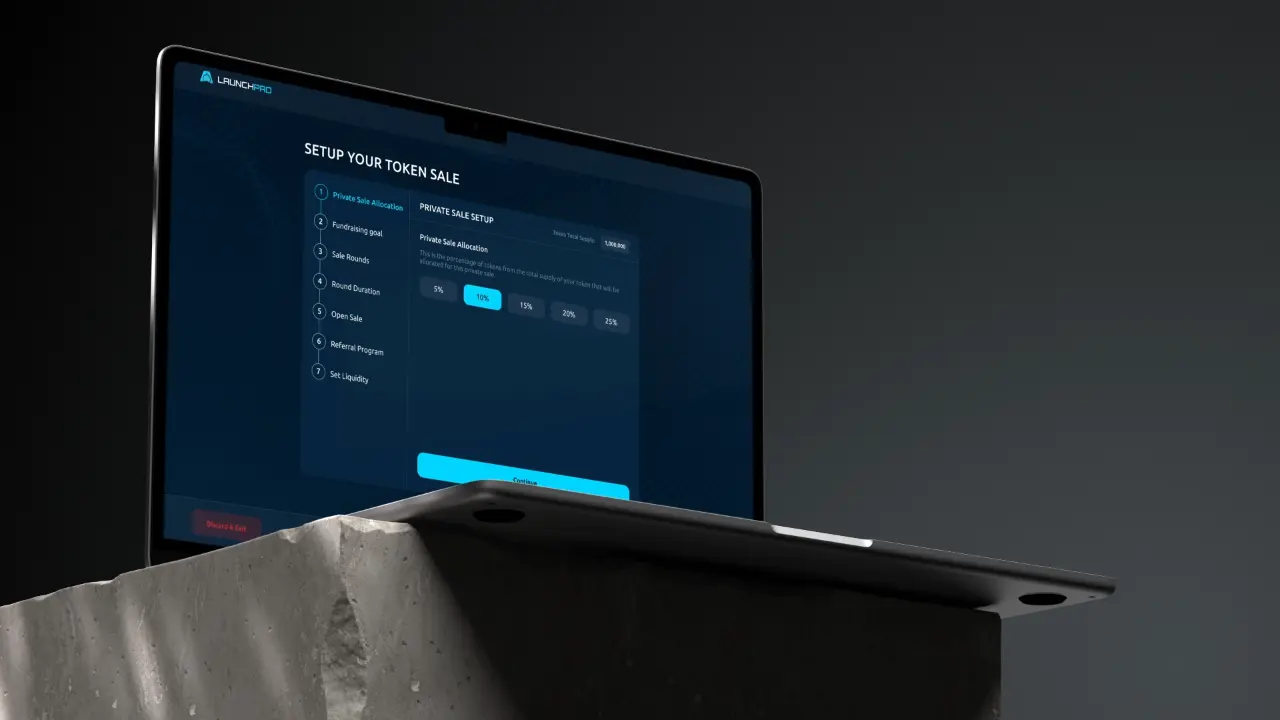
ICO / Token Sale Infrastructure

Smart contract-based sale mechanics, KYC-gated participation, investor dashboards, and fully automated vesting and distribution, built as a direct extension of the token engagement rather than a disconnected add-on.

05

Governance & Staking Mechanics

On-chain governance and staking systems tied genuinely to token utility and long-term holder incentives, designed to reward sustained participation rather than short-term speculation alone.

06

Semi-Fungible & Utility Tokens

ERC-1155-based semi-fungible tokens for tickets, in-game items, and hybrid fungible/non-fungible use cases that don't fit cleanly into a standard ERC-20 or ERC-721 model.

The Challenge

Why Most Tokens Die Within Their First Year

Nearly every Web3 product Quecko builds — a DeFi protocol, a launchpad, a gaming ecosystem, a DAO — eventually needs a native token to align incentives, govern the protocol, or capture value for its community, which makes token engineering one of the most universally requested capabilities across the entire Web3 stack rather than a standalone niche service. What separates a token that becomes genuine long-term infrastructure from one that becomes a cautionary tale is almost never the smart contract code itself — it's whether the underlying economic model was actually modeled rigorously before launch. Minting a token is trivial — any team can copy an ERC-20 template in an afternoon. Designing one that holds value under real market conditions is a completely different and much harder problem. Supply schedules, vesting cliffs, and incentive structures that look perfectly reasonable on a spreadsheet routinely break down once early holders and team members start selling into thin early liquidity. The difference between a token that survives its first genuine bear market and one that doesn't collapse to near-zero comes down almost entirely to the economic modeling done before launch, not the Solidity code, which is genuinely the easy part of the engagement.

The Old Way
Copy a token contract template, set a supply number, and call tokenomics 'done'
Design vesting schedules without modeling what happens when they unlock into thin liquidity
Launch an ICO with no legal classification review of what the token actually is
Treat governance and staking as a marketing feature rather than a genuine incentive mechanism
The Quecko Way
Model supply, emission, and incentive structures against realistic multi-year market scenarios before writing code
Explicitly simulate vesting unlock events against expected liquidity depth at each cliff date
Coordinate token classification review with legal structuring before any public sale begins
Design governance and staking mechanics tied to genuine long-term protocol incentives, not just launch-day marketing
Execution Blueprint

Execution Timeline

01Day 1–22

Tokenomics & Standard Selection

Model supply, utility, and incentive structures in detail, and select the right token standard and target chain for your specific ecosystem and user base.

02Day 23–44

Contract Development & Testing

Build the token contract — and native coin/chain infrastructure if your project requires a sovereign asset rather than a token on an existing chain — with full test coverage.

03Day 45–66

Security Audit

Independent third-party audit before any mainnet deployment, covering both contract-level security and a review of the underlying tokenomics assumptions for internal consistency.

04Day 67–88 (Sale Infrastructure (Where Applicable))

Phase 4

If a token sale is part of the launch, build KYC-gated sale contracts, investor dashboards, and automated vesting infrastructure in coordination with legal structuring for the offering.

Technology

Technologies We Master

Tools, frameworks, and protocols we use to build secure and scalable solutions.

Languages

SoliditySolidity
RustRust

Frameworks

OpenZeppelin ContractsOpenZeppelin Contracts
FoundryFoundry
HardhatHardhat
Anchor (Solana)Anchor (Solana)

Tokenomics Modeling

Custom simulation toolingCustom simulation tooling
Monte Carlo stress-testing scriptsMonte Carlo stress-testing scripts

Security

SlitherSlither
MythrilMythril
third-party audit firmsthird-party audit firms
Our Edge

Why Quecko for Coin & Token Development

Every token engagement starts with tokenomics modeling, not a template contract adapted from a tutorial and lightly modified for your project's branding.

Economics Before Code

Every token engagement starts with tokenomics modeling, not a template contract adapted from a tutorial and lightly modified for your project's branding.

Multi

Standard Depth — Native chains and every major token standard, matched to your specific ecosystem rather than a one-size-fits-all default we happen to be most familiar with.

Full Lifecycle Ownership

From tokenomics design through audit, sale infrastructure, and exchange listing support — one accountable team across the entire lifecycle, not a handoff between disconnected vendors.

Sale

Ready When Needed — ICO/token sale infrastructure is available as a direct, coordinated extension of the token build, not a separate engagement requiring a different vendor relationship.

Our Work

Our Projects

Video thumbnail
Video thumbnail
Video thumbnail
Video thumbnail
Social Proof

With hard work, determination, and an amazing team at Quecko, we can overcome any obstacle and achieve anything we set our minds to.

Tom Blears

Bitcast Protocol
Engagement

How We Collaborate

Tokenomics Design Only (3–5 weeks)

Economic modeling and full documentation for teams building the contract itself in-house or with another development partner.

Full Token Build (6–14 weeks typical)

End-to-end development, audit, and launch support for the token contract and its surrounding infrastructure.

Token + ICO Package (10–18 weeks typical)

Combined token development and full token sale infrastructure for a project raising capital through a public or private sale.

FAQ

Frequently Asked Questions

ERC-20, BEP-20, SPL, TRC-20, ERC-1155, and native chain tokens — matched to your target ecosystem based on where your actual user and liquidity base is concentrated, rather than defaulting to whichever standard is most commonly requested.

Yes — economic modeling and incentive design are a mandatory, non-optional part of every engagement, since a technically flawless token contract enforcing an unsustainable economic model still produces a token that fails, just on a longer timeline and less visibly than a code exploit would.

Yes, ICO infrastructure — sale contracts, KYC-gating, investor dashboards, automated vesting — is available as a direct, coordinated extension of the token development engagement, working alongside our Legal Structuring team so the technical build and the legal classification are handled together rather than as disconnected workstreams.

Yes, we offer tokenomics redesign and migration planning for live projects facing sustainability issues, which typically involves modeling a path to a revised emission schedule or governance structure that can realistically be adopted by existing holders without triggering a damaging community backlash.

This depends on whether your project genuinely needs its own consensus mechanism and validator set (warranting a native coin) versus simply needing a fungible asset within an existing ecosystem (where a standard token like ERC-20 is far faster and cheaper to launch and maintain) — we assess this explicitly during the standard selection phase rather than defaulting to the more complex option.

This is exactly why governance mechanisms and, where appropriate, upgradeable contract components matter — we design tokens with reasonable flexibility for the protocol's utility to evolve through governed decisions, rather than hard-coding assumptions that only make sense for the exact roadmap in place at launch.

Blogs

Latest Stories from Quecko

Ready to launch a token engineered to survive its first bear market, not just its launch week?